
The ER Doctor Told Me I Should Have Come In Sooner. Now I Never Wonder If My Oxygen Is Okay.
How a tiny fingertip device gave me the confidence to know when I’m fine - and when I actually need help
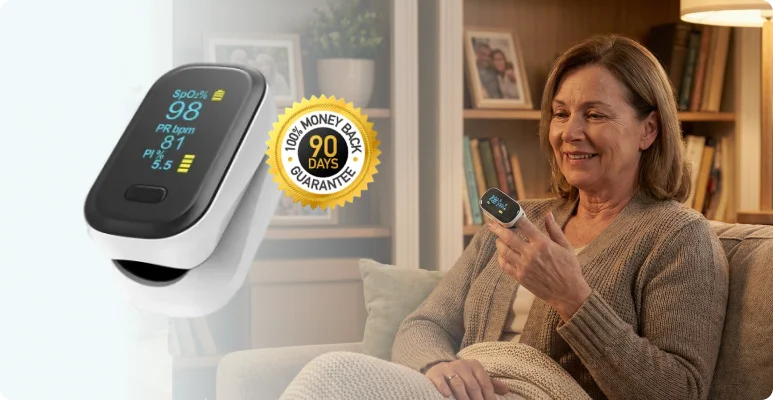
I Kept Telling Myself It Was “Probably Nothing”
Last winter, I caught a respiratory bug that lingered for weeks.
Most days I felt okay. A little tired. A little short of breath climbing stairs. But nothing that seemed serious.
“It’s just taking time to clear,” I told myself.
Then one night, I woke up at 3 AM with my heart racing. Couldn’t catch my breath. Dizzy when I stood up.
I drove myself to the ER.
The nurse clipped a small device on my finger. Looked at the number. Her expression changed.
“Your oxygen is at 89%,” she said. “That’s too low. You should have come in days ago.”
I had no idea. I felt tired, sure. But I didn’t feel like I was in danger…
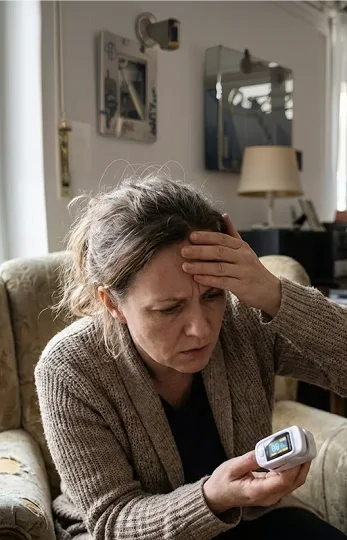
Worried about your oxygen levels but unsure if your symptoms are serious enough to see a doctor?
This FDA-cleared fingertip device is helping thousands check their blood oxygen in seconds - so they know when to rest, when to call their doctor, and when to get help immediately.
Click here to discover how you can monitor your oxygen levels at home →
Turns out, oxygen can drop slowly. Your body compensates. You don’t always feel it until it’s become a real problem.
The doctor called it “silent hypoxia.” Your oxygen falls, but you don’t gasp for air. You just feel… off.
After that night, I promised myself I’d never wonder again.
Why “Feeling Fine” Isn’t Always Enough
Here’s what I learned: your body is remarkably good at hiding oxygen problems.
You might feel a little tired. Maybe some brain fog. Perhaps slightly winded doing things that used to be easy.
But none of those symptoms scream “emergency.”
So you wait. You assume it’ll pass. You tell yourself you’re being dramatic.
Meanwhile, your oxygen could be at 91%. Or 88%. Or lower.
The tricky part? There’s no way to know without measuring it.
That’s why pulse oximeters became essential during COVID. Doctors told patients to monitor at home because symptoms alone weren’t reliable indicators of oxygen levels.
But here’s the problem with most home oximeters.
The cheap ones give you numbers you can’t trust. They might show 97% when you’re actually at 92%. Or they fluctuate wildly reading to reading.
The expensive clinical ones cost hundreds of dollars and require training to use.
What most people need is something in between. Accurate enough to trust. Simple enough to use daily.
What I Wish I’d Had That Night
After my ER visit, I started researching pulse oximeters.
I wanted something I could trust. Not a $15 device with questionable accuracy. But not a $300 hospital unit either.
That’s when I found the Herz P1 Smart Oximeter.
What caught my attention? The certifications.
FDA 510(k) cleared. CE marked. ISO 13485 certified. These aren’t marketing claims. They’re regulatory validations that require actual clinical testing.
The accuracy specs matched what I saw in the ER: ±2% for oxygen saturation, ±1 BPM for pulse rate.
And the display? A dual-color OLED I could actually read without squinting.
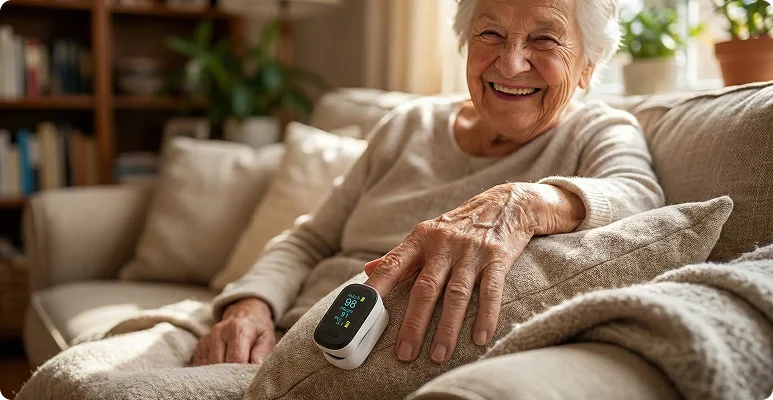
The Certifications That Actually Matter
Not all oximeters are tested equally.
The Herz P1 carries nine international certifications. That includes FDA 510(k) clearance - which requires clinical validation across hundreds of data points to prove accuracy.
It also has CE marking under Europe’s Medical Device Regulation. ISO 13485 certification for manufacturing quality. TGA approval for Australia.
Why does this matter?
Because a $20 oximeter can claim “accurate readings” without proving it. These certifications mean independent regulatory bodies verified the device meets medical standards.
When you’re checking whether your oxygen is safe, that verification matters.
What People Are Saying
“After COVID, I was anxious every time I felt short of breath. Now I check my oxygen in 10 seconds and either relax or know I need to call my doctor. The peace of mind is worth everything.”
- Linda, 58
“I bought this for my mother who has COPD. The large display is easy for her to read, and the alarm feature means she doesn’t have to remember to check constantly.”
- Michael, 42
“I’m a hiking guide who works at altitude. I check my clients and myself multiple times per trip. This oximeter is accurate, lightweight, and the batteries last forever.”
- David, 35
“My doctor told me to monitor my oxygen at home after pneumonia. This was exactly what I needed - medical-grade accuracy without the medical-grade price.”
- Barbara, 67
Ever since the Herz P1 Smart Oximeter gained attention for its medical-grade accuracy at an accessible price, demand has been growing rapidly. Because of its popularity and consistent 5-star reviews, Herz is super confident in their product - which means they are offering a 100% no questions asked, 90-day money-back guarantee, and for a limited time, extending a one-time discount of up to 60% OFF! PLUS, they’re also throwing in FREE SHIPPING with every order.
To see if this one-time discount is still available, click on the button below.
Frequently Asked Questions
The Herz P1 meets the same accuracy standards used in clinical settings: ±2% for SpO2 (80-99% range) and ±1 BPM for pulse rate. That’s FDA 510(k) validated accuracy.
Within seconds. Clip it on your finger, wait for the reading to stabilize, done.
You can set thresholds for oxygen and pulse rate. If your levels fall outside your safe zone, the device alerts you immediately.
Yes. The dual-color OLED shows oxygen in one color, pulse in another. Six display modes let you choose what works best for your eyes. Four viewing directions mean you can read it at any angle.
Standard AAA batteries last months with normal use. The auto power-off feature (8 seconds of inactivity) prevents accidental drain. A battery indicator warns you before they die.
Simply return it for a full refund. No questions asked.
The Bottom Line: You can’t feel your oxygen level. Not reliably.
That’s not a flaw in your body. It’s just how human physiology works. Oxygen drops gradually. You compensate without realizing it.
The only way to know for sure is to measure it.
The Herz P1 gives you that knowledge in seconds. FDA-cleared accuracy. A display you can actually read. Alarms that alert you if something’s wrong.
It won’t diagnose conditions or replace your doctor. But it tells you when you’re fine - and when you should call for help.
I check my oxygen now whenever I feel off. Most of the time, I see 97% or 98% and relax.
But if I ever see 92% again, I’ll know immediately.
That knowledge is worth everything.
FDA 510(k) Cleared
|
CE Certified
|
ISO 13485 Quality Assured
Oximeter
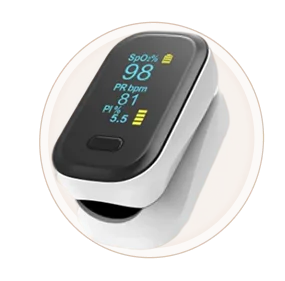
accuracy with The Herz P1 Smart
Oximeter .